
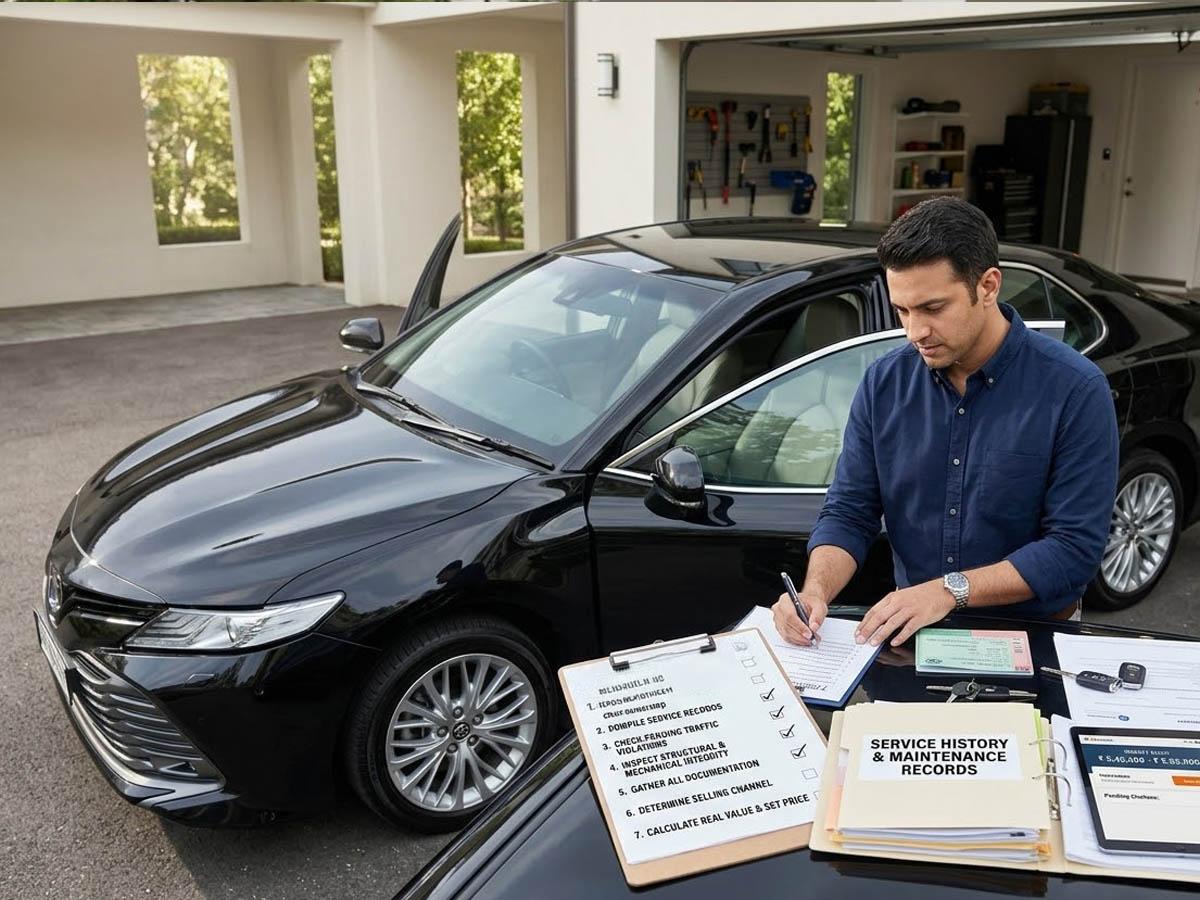
The decision to sell your car is often driven by necessity rather than desire. A new job in a different city, an unexpected financial need, or simply the itch for an upgrade, whatever the reason, once you’ve decided to let go of your vehicle, the urge to complete the sale quickly can be overwhelming. This urgency, however, can lead you to overlook critical details that could cost you significantly in the long run. Before you list your car online, call the dealership, or invite potential buyers for inspections, take a step back and work through this essential checklist. These seven checkpoints will ensure you’re not leaving money on the table and that you’re protected throughout the transaction.
Verify Your Vehicle’s Registration and Ownership Status
The foundation of any car sale is clear ownership. Before anything else, confirm that your name appears on the RC (Registration Certificate) and that there are no discrepancies. Check if the vehicle has outstanding loans or financial obligations attached to it. If your car is financed through a bank or NBFC, you cannot legally sell it without their consent and clearance. Banks typically maintain a lien on the vehicle until the loan is fully repaid. Attempting to sell a car with an active lien will complicate the transaction, potentially making it null and void. Visit your nearest RTO office or check online through your state’s motor vehicle portal to verify your registration details and ensure everything is in order.
Assess the Complete Service History and Maintenance Records
Buyers today are more informed than ever. They’ll ask for service records, and their absence or gaps will raise red flags. Compile a comprehensive record of all maintenance performed on your vehicle, oil changes, filter replacements, major repairs, and any significant component replacements. This documentation not only justifies the price you’re asking but also builds buyer confidence. If you’ve maintained your car diligently, these records become your strongest selling tool. Conversely, if your service history is sparse or shows neglect, it’s better to get the vehicle properly serviced before putting it on the market. A fresh service costs far less than the discount you’ll be forced to offer when buyers see evidence of poor maintenance.
Check for Outstanding Traffic Violations and Pending Challans
One of the most overlooked checkpoints is verifying whether your vehicle has any pending traffic fines or challans. These outstanding violations can transfer to the new owner and complicate the RC transfer process at the RTO. Log into the transport department’s portal for your state and search for any pending challan against your registration number. If you find any, clear them immediately. Not only will this streamline the sale process, but it also demonstrates to potential buyers that you’ve maintained a clean driving record. Some states have made it mandatory to clear all outstanding fines before processing an RC transfer, so this is non-negotiable.
Inspect the Vehicle’s Structural and Mechanical Integrity
Before inviting buyers, conduct a thorough inspection of your car’s condition. Check for rust, corrosion, dents, and scratches, both visible and hidden. Look under the hood and inspect hoses, belts, fluid levels, and battery condition. Test all mechanical systems: steering, brakes, acceleration, and suspension. Turn on every electronic feature, headlights, wipers, air conditioning, power windows, and the infotainment system. A vehicle with surprises discovered during buyer inspections will lose value rapidly. It’s better to identify issues yourself and either repair them or adjust your asking price accordingly. Be honest with yourself about what needs fixing; this transparency prevents last-minute deal collapses.
Gather and Organise All Documentation
Beyond the RC and service records, you’ll need multiple documents for the sale. Collect your driving license, insurance documents, pollution certificate, roadworthiness certificate (if applicable), and any warranty documents or spare keys you possess. Create a single folder, digital or physical, with all these documents organised chronologically. This not only speeds up the sales process but also signals to buyers that you’re a responsible owner. Missing documentation can delay the RC transfer and create complications weeks after the sale. If any original documents are lost, obtain duplicates from the RTO before putting your car on the market.
Determine the Right Selling Channel for Your Vehicle
Not every selling method is right for every car. A high-mileage family sedan might fetch better value through specialised online platforms, which conduct professional inspections and have systems designed to handle transfers efficiently. A niche or collector’s vehicle might benefit from enthusiast forums or specific marketplaces. A budget hatchback might sell quickly through local classified platforms. Research which channels are popular for your specific vehicle type, condition, and price range. Each channel has different buyer demographics, price expectations, and negotiation patterns. Understanding these differences helps you choose the platform that maximises your return and minimises the time your car sits unsold. Some platforms also offer seller protection policies alongside other services like home inspections and same-day payments, such as Cars24’s Seller Kavach, which protects sellers till the RC transfer has been completed on paper.
Calculate the Real Value and Set a Realistic Price
The difference between an optimistic asking price and a realistic one can determine whether your car sells in days or sits for months. Use multiple valuation tools, check classified platforms, dealer quotations, and online valuation websites. Factor in your vehicle’s make, model, year, mileage, condition, and location. Consider the current market demand for your specific vehicle. Setting a competitive price upfront attracts more serious buyers and closes deals faster. Overpricing, even by a small amount, can deter buyers who then anchor to lower figures during negotiations, ultimately costing you more than the original overcharge.
The Bottom Line
Selling your car requires more than posting photos and waiting for offers. These seven checkpoints serve as your roadmap to a smooth, profitable transaction. Invest time in this preparation phase, and you’ll not only secure a better price but also protect yourself from post-sale complications that could haunt you for months.
